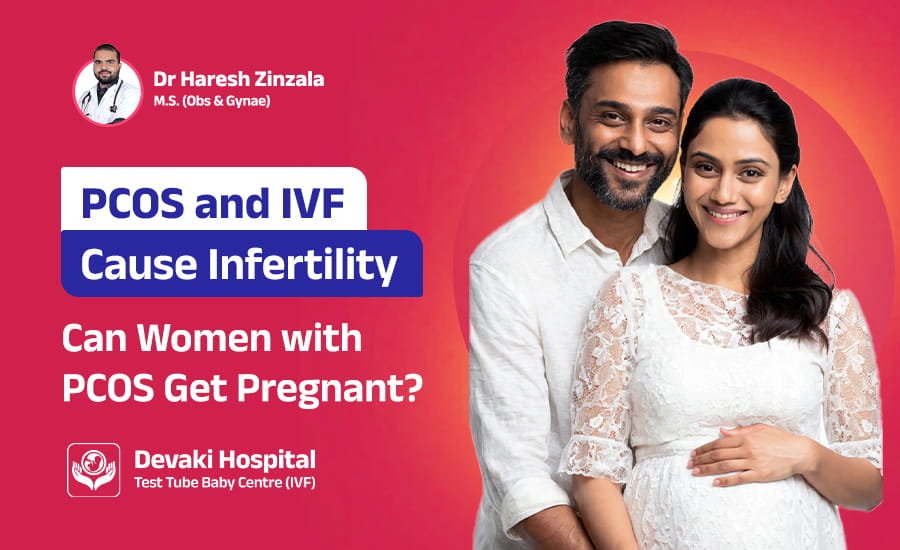
PCOS is a common health problem that affects many women. It can cause irregular periods and make it harder to get pregnant. Many women worry that they may never become mothers because of this condition. One helpful treatment is PCOS and IVF, which has helped many women start their families. At Devaki IVF Centre, doctors understand the challenges women face with PCOS. As a trusted IVF Center in Surat, they provide safe and advanced fertility treatments along with emotional support. With expert guidance and the right plan, women with PCOS can still achieve their dream of becoming mothers.
What is PCOS?
PCOS stands for Polycystic Ovary Syndrome. It is a common health problem that affects girls and women, especially during their childbearing years.
PCOS happens when a woman’s hormones are not balanced. Hormones are special chemicals in the body that control how different parts work. When these hormones are out of balance, the ovaries may not work properly.
Why Does PCOS Cause Infertility?
PCOS (Polycystic Ovary Syndrome) affects how a woman’s ovaries work. Normally, every month:
- One egg grows inside the ovary
- The egg is released (this is called ovulation)
- Pregnancy can happen if the egg meets sperm
But with PCOS:
- Hormones are not balanced
- Eggs may not grow properly
- The ovary may not release an egg every month
- Periods become irregular
If the body does not release an egg, pregnancy cannot happen naturally.
PCOS and IVF: How Does IVF Help?
If a woman has PCOS, her body may not release eggs regularly. This makes it harder to get pregnant naturally. IVF (In Vitro Fertilization) can help by working around this problem.
1. Medicines help the ovaries grow eggs.
Doctors give special medicines so the ovaries can make mature eggs.
2. Doctors collect the eggs.
When the eggs are ready, the doctor carefully removes them.
3. The eggs are fertilized in a lab.
The egg is combined with sperm in a laboratory to create an embryo.
4. The embryo is placed in the uterus.
The healthy embryo is placed back into the woman’s uterus to grow into a baby.
![🧩 FIND THE Missing Puzzle OF YOUR LIFE 👶
Sometimes, all your dream of becoming parents needs is the right diagnosis and the right treatment.
If you've been trying to conceive without success, don't lose hope. At Devaki IVF Centre, our fertility experts help identify the missing piece of your parenthood journey with advanced fertility evaluation and personalized IVF care.
Every puzzle has a solution. Let us help you complete yours.
📞 Call/WhatsApp: +91 90163 57992
🌐 Online Appointment: www.devakiivf.com
#DevakiIVF #FertilityCare #IVFJourney #IVFTreatment #Surat
[ IVF treatment, fertility clinic Surat, IVF Surat, infertility treatment, fertility specialist, parenthood journey, pregnancy planning, IVF consultation, test tube baby, Devaki IVF Centre ]](https://devakiivf.com/wp-content/plugins/instagram-feed/img/placeholder.png "PCOS and IVF: Can Women with PCOS Get Pregnant? 1")
Is IVF Successful in Women with PCOS?
Yes, IVF can be very successful for women with PCOS.
PCOS (Polycystic Ovary Syndrome) can make it hard to get pregnant because it affects ovulation. Ovulation is when the ovary releases an egg. Without regular ovulation, pregnancy becomes difficult.
How to Improve IVF Success with PCOS
If you have PCOS and are planning for IVF, there are simple steps that can help improve your chances of getting pregnant.
- Stay at a Healthy Weight – Even losing a small amount of weight can help balance hormones and improve egg quality.
- Eat Healthy Foods – Choose fresh fruits, vegetables, whole grains, and protein. Avoid too much sugar and junk food.
- Control Blood Sugar Levels – Many women with PCOS have high insulin levels. Keeping blood sugar stable helps your body respond better to IVF treatment.
- Exercise Regularly – Light exercise like walking, yoga, or cycling can improve hormone balance and reduce stress.
- Follow Your Doctor’s Advice – Take medicines on time and go for regular check-ups. This helps prevent problems during IVF.
- Reduce Stress – Try deep breathing, prayer, meditation, or talking to loved ones. A calm mind supports your body.
Conclusion
PCOS can make it harder to get pregnant, but it does not mean you cannot become a mother. PCOS and IVF is one of the most helpful options when medicines or other treatments do not work. At Devaki IVF Centre, the doctors know that PCOS can be hard to deal with. If you are looking for a trusted IVF Center in Surat, getting expert guidance can make your journey easier and more hopeful.