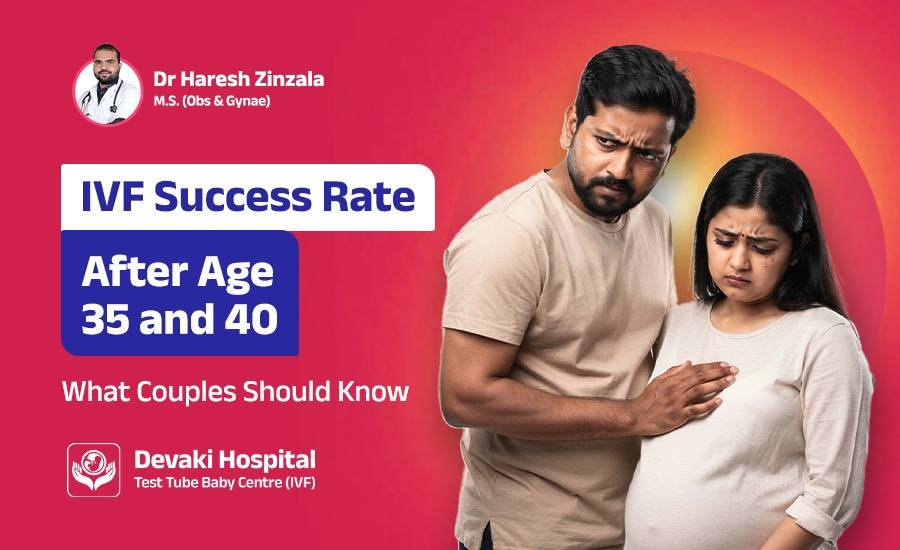
Understanding the IVF Success Rate After Age 35 is crucial for couples planning to start or grow their family later in life. As people get older, it can become harder to have a baby. Because of this, many people look for medical help and support. Choosing the right doctor is very important during this time. Devaki Hospital & Test Tube Baby Centre is a trusted IVF center in Surat. It provides caring support and modern treatment for people who need help having a baby. With the right care and timely treatment, many couples can still have a baby and achieve their dream of becoming parents.
Why Age Matters in IVF Success
Age plays a big role in fertility. As women get older, the number and quality of their eggs go down. This makes it harder to get pregnant. After age 35, fertility starts to drop faster. By age 40, the chances of getting pregnant naturally or through IVF become lower. Even then, many couples can still have a baby with the help of modern IVF treatments.
IVF Success Rate After Age 35
The IVF success rate after age 35 is about 40% to 50% per cycle. This means out of 100 women, around 40 to 50 may get pregnant in one IVF attempt. Even though this is lower than women under 35, it still gives good hope.
What Affects IVF Success?
Many things can affect IVF success, such as:
- Number of eggs (ovarian reserve)
- Quality of eggs
- Sperm health
- Health of the uterus
- Lifestyle habits like stress, food, and body weight
IVF Success Rate After Age 40
After age 40, the success rate of IVF is lower. It is usually around 10% to 25% for each cycle. This happens because:
- Egg quality decreases with age
- There are higher chances of genetic problems in eggs
- The ovaries may not work as well as before
But pregnancy is still possible with the right treatment. Doctors may use:
- ICSI, a method where a single sperm is placed into an egg
- Genetic testing (PGT) to choose healthy embryos
- Donor eggs in some cases
![🧩 FIND THE Missing Puzzle OF YOUR LIFE 👶
Sometimes, all your dream of becoming parents needs is the right diagnosis and the right treatment.
If you've been trying to conceive without success, don't lose hope. At Devaki IVF Centre, our fertility experts help identify the missing piece of your parenthood journey with advanced fertility evaluation and personalized IVF care.
Every puzzle has a solution. Let us help you complete yours.
📞 Call/WhatsApp: +91 90163 57992
🌐 Online Appointment: www.devakiivf.com
#DevakiIVF #FertilityCare #IVFJourney #IVFTreatment #Surat
[ IVF treatment, fertility clinic Surat, IVF Surat, infertility treatment, fertility specialist, parenthood journey, pregnancy planning, IVF consultation, test tube baby, Devaki IVF Centre ]](https://devakiivf.com/wp-content/plugins/instagram-feed/img/placeholder.png "IVF Success Rate After Age 35 and 40 1")
How to Improve IVF Success After 35
If you are trying IVF after age 35, there are ways to improve your chances of success. Here are some simple tips:
Visit a Doctor Early
Talk to a fertility doctor as soon as possible. Early help can increase your chances.
Eat Healthy Food
Eat fruits, vegetables, whole grains, and protein. Healthy food helps your body stay strong.
Stay Active
Light exercise like walking or yoga can help your body and reduce stress.
Avoid Smoking and Alcohol
These can harm egg quality and lower your chances of success.
Follow Your Doctor’s Advice
Take medicines on time and follow all instructions carefully.
Manage Stress
Try to stay calm. You can talk to family, friends, or a counselor for support.
Get Enough Sleep
Good sleep helps your body stay healthy and ready for treatment.
When Should You Consider IVF?
You may think about IVF (In Vitro Fertilization) if:
- You have been trying to have a baby for 6 months or more after age 35 and it hasn’t worked
- You or your partner have known fertility problems
- Other treatments have not been successful
- You want to preserve fertility for the future
Conclusion
The IVF Success Rate After Age 35 may be lower than in younger years, but many couples can still have a baby with the right care. Even after 40, IVF can work with the help of modern treatments and expert doctors. The most important step is to get help early and understand your options. At Devaki Hospital & Test Tube Baby Centre, a trusted IVF center in Surat, couples get kind care and modern treatment to help them have a baby.